Why Patient Education Materials Improve Outcomes
Patients forget 40-80% of what you tell them. See how patient education materials improve adherence, cut front desk calls, and reduce complications.
Throughout the visit, your patients nod in accord. They claim to comprehend. Three days later, your front desk is answering calls from patients who can't recall their medication regimen, post-operative instructions, or if they can eat before the test.
That's not unusual. According to studies, people forget between 40 and 80 percent of what a doctor has told them by the time they leave the facility. For someone having surgery or starting a new medication, such delay is more than just inconvenient. It results in problems, missed follow-ups, and calls that your staff shouldn't have to answer.
Patient education materials fix this. Not because they're clever or well-designed, but because written information works in a way verbal instructions simply can't. Here's what the research says, and what it means for your clinic.
Why Patients Forget What You Tell Them
This is worth understanding before anything else. Forgetting isn't a character flaw. It's how memory works under stress.
Many times, a patient in your exam room is in pain, nervous, or still absorbing what you just told them. They are divided in their focus. The information competes with everything else in their minds when you give them advice for aftercare at the precise moment they're handling a diagnosis or getting ready to depart.
A study published in the Journal of the Royal Society of Medicine found that patients forget 40-80% of medical information immediately after a clinic visit. Of what they do retain, about half is remembered incorrectly.
That means a patient who confidently says "I've got it" at checkout may have a wrong picture of their care plan by the time they reach their car.

Figure: Patients who leave with written instructions are significantly more likely to follow their care plan correctly at home.
What the Research Says About Written Patient Education
The evidence is consistent across specialties and patient populations. Written materials work.
A systematic review published in Patient Education and Counseling found that combining verbal counseling with written materials improved patient recall by 30-40% compared to verbal instructions alone. That's not a marginal difference. It's the gap between a patient who understands their follow-up schedule and one who guesses.
Written discharge instructions lower avoidable readmissions, especially in surgical and post-procedure care, according to research from the Agency for Healthcare Research and Quality. Clear written instructions help patients better manage their recuperation and reduce the likelihood that they will return to your office or the ER.
Health literacy is a big part of why this matters. The National Center for Education Statistics estimates that 54% of US adults read below a sixth-grade level. When a doctor explains post-surgical care using medical terms, a large share of patients are hearing a second language. Plain-language written materials close that gap in a way that verbal explanations can't.
Three Outcomes Your Clinic Can Track in 30 Days
The advantages manifest in quantifiable ways. Without a research budget, your practice can truly witness these three.
Medication adherence goes up
The World Health Organization estimates that 50% of patients with chronic conditions don't take their medications as prescribed. Poor communication at the point of prescribing is one of the leading causes. A clear, one-page medication guide given at checkout addresses this directly.
Front desk calls go down
Think about the calls your front desk handles every week from patients asking questions that were already answered at the appointment. "Can I eat before the procedure?" "How many times a day do I take this?" "Is bruising normal after the extraction?"
There are consistently fewer of these calls reported by clinics that standardize their discharge materials. Before there is a phone interruption, the question is addressed in the handout.
Preventable complications drop
For procedure-heavy practices like orthopedics, dentistry, and physical therapy, patient misunderstanding of post-care is a direct risk factor for complications. A patient who stops their home exercise program early because they thought it was optional. A patient who eats on the morning of a fasting procedure because nobody wrote it down.
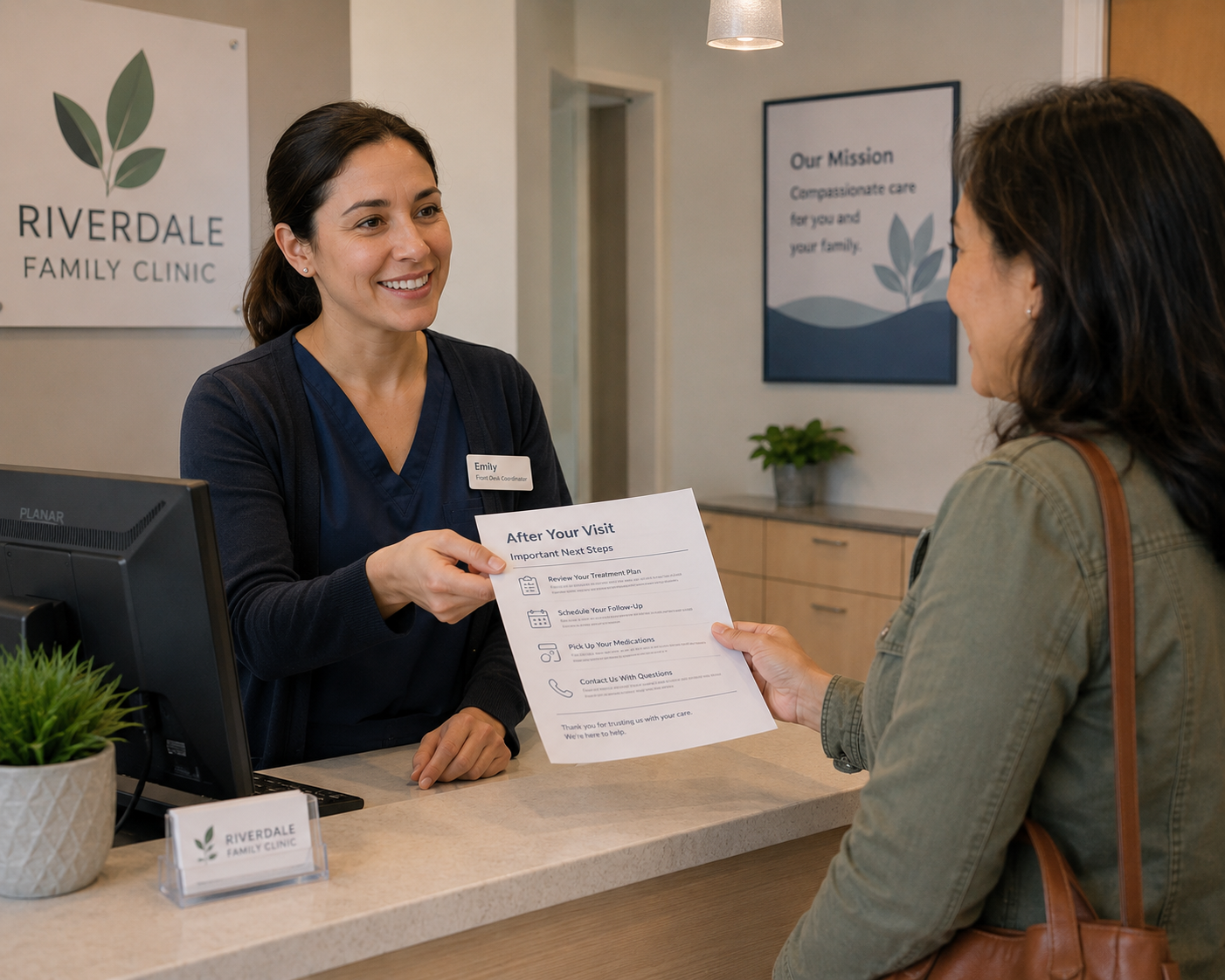
Figure: Standardizing discharge handouts reduces post-visit calls and lowers the risk of preventable complications.
What Makes a Patient Handout Actually Work
Not every handout gets read. Handing a patient a dense two-page document in small font is not patient education. It is a contribution to recycling.
The average clinic handout in use today is written at a 10th to 12th-grade reading level, according to research published in the American Journal of Health Behavior. The recommended target is sixth grade or below. That gap explains why many clinics give out materials and still see poor compliance.
Here's what separates a handout that gets used from one that goes in the bin:
- Reads at a sixth-grade level or below
- Uses numbered steps or short bullet points instead of paragraphs
- Uses specific instructions, not vague ones. "Take 1 tablet at 8am and 8pm with food" beats "Take as directed"
- Fits on one page
- Has your clinic's name, logo, and phone number on it
That last point matters more than most clinics expect. A generic handout looks throwaway. A handout with your logo and contact details looks like an official document. Patients keep it. They refer back to it. When they have a question, they call you instead of searching online.
How Small Practices Can Start Without a Tech Budget
Most research on patient education focuses on large hospital systems with EMR integrations, patient portals, and automated follow-up workflows. That's not how most small and solo practices actually operate.
You don't need any of that.
A one-page printed handout provided at the register is effective. The evidence for textual patient education is decades older than that of electronic health records. A 400-bed hospital and a two-provider family practice receive the same benefits, and the process is the same: write it down and give it to the patient before they depart.
A practice coordinator at a 2-provider family practice started with a single handout for their most common post-procedure question: what to expect after a blood draw. She printed 20 copies, added the clinic's name and phone number, and gave one to every patient who had labs drawn. Within two weeks, the front desk stopped fielding calls about bruising and soreness. She moved on to the next most-common callback and repeated the process. Within a month she had six handouts in rotation and a noticeably quieter phone.
Start with one handout for your highest-volume procedure or condition. If you run a dental practice, that's probably post-extraction care. Dental patient handout templates at ClinicsFlows cover 100 procedures including extraction recovery, root canal aftercare, and orthodontic instructions. If you're in physical therapy, it's the home exercise protocol for your most common patient type. Physical therapy handout templates are sorted by condition and body region so you can find the right one in under a minute. If you're in pediatrics, it's the well-child visit summary that parents ask about most. Pediatric patient handout templates cover vaccine aftercare, developmental milestones, and fever management in plain language parents can actually follow.
Get that one handout right. Plain language. One page. Your clinic's contact details. Build from there.
ClinicsFlows has 2,000+ free patient education templates across 14 specialties, all written for plain-language readability and built for small practices. Each one can be customized with your clinic's name, logo, and contact info in a few minutes.
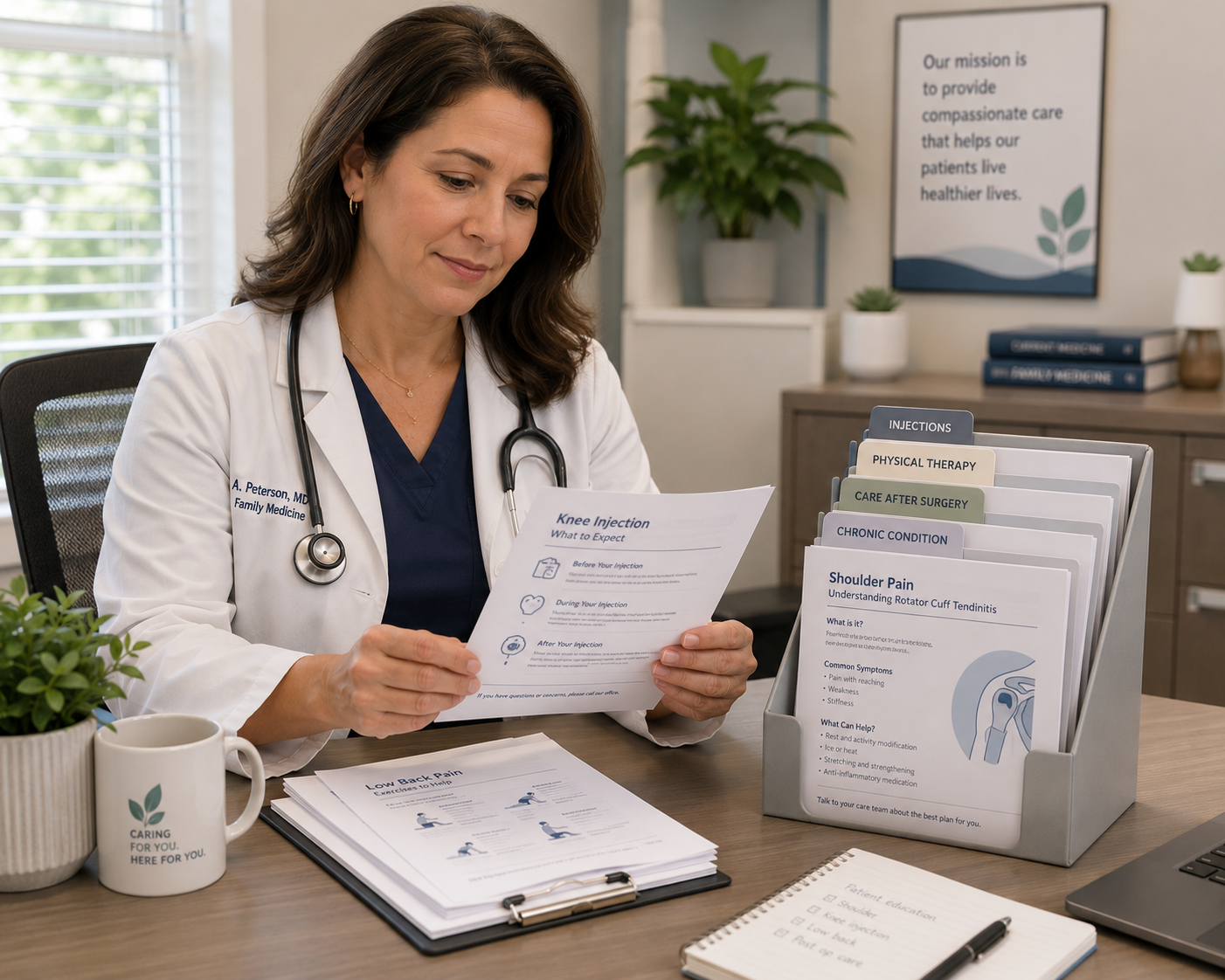
Figure: Starting with one well-written handout for your most common procedure is enough to see a measurable difference within a month.
How to Know If Your Handouts Are Working
Pick two numbers and track them for 30 days before and after you start giving patients written materials consistently:
- Patient calls asking post-visit questions per week
- No-show rate for follow-up appointments
If both drop, your handouts are working. If only one drops, you'll know which problem you solved and what still needs attention.
Some clinics also track callbacks in the first seven days after a procedure. A drop in that number is a direct signal that patients are understanding and following their post-care instructions without needing to call back for clarification.
Frequently Asked Questions
What are patient education materials?
Patient education materials are written or printed documents given to patients to help them understand their condition, treatment, or care instructions. Common examples include post-visit instruction sheets, medication guides, pre-procedure checklists, and disease management handouts. The goal is to give patients something to refer to at home after the appointment ends.
Do patient education materials actually improve patient outcomes?
Yes, consistently across the research. Studies in primary care, surgical specialties, and chronic disease management all show that patients who receive written instructions alongside verbal explanations are more likely to follow their care plan. The strongest effects are on medication adherence, post-procedure care, and follow-up appointment attendance.
What reading level should patient handouts be written at?
Sixth grade or below. That's the standard recommended by the CDC, the American Medical Association, and most health literacy guidelines. Most handouts currently in use are written at a 10th-grade level or higher, which is one of the main reasons patients don't follow through even when materials are provided.
How long should a patient education handout be?
One page. Patients given multi-page documents in a clinical setting rarely read past the first page. Focus on the most important actions the patient needs to take. Use bullet points or numbered steps. Leave white space so the page doesn't feel overwhelming.
Can a small clinic benefit from patient education materials without an EMR or patient portal?
Yes. A printed handout given at checkout is enough. The evidence for written patient education predates digital health tools by decades and doesn't depend on technology to work. A one-page printed sheet with your clinic's name and contact details gets the job done.
Give Patients Something to Take Home
Patients don't forget their care instructions because they're careless. They forget because verbal information under stress doesn't stick. Written materials change that.
Pick your highest-volume procedure or condition and find a ready-made handout for it. Put your clinic's name on it. Give it to every relevant patient before they leave. That's the whole system for a small practice, and it takes less than a day to set up.
Browse 2,000+ free patient education templates at ClinicsFlows, sorted by specialty and procedure. Every template is free, ready to brand with your clinic's name and logo, and written at a reading level your patients can follow.